Cyanotype Photography
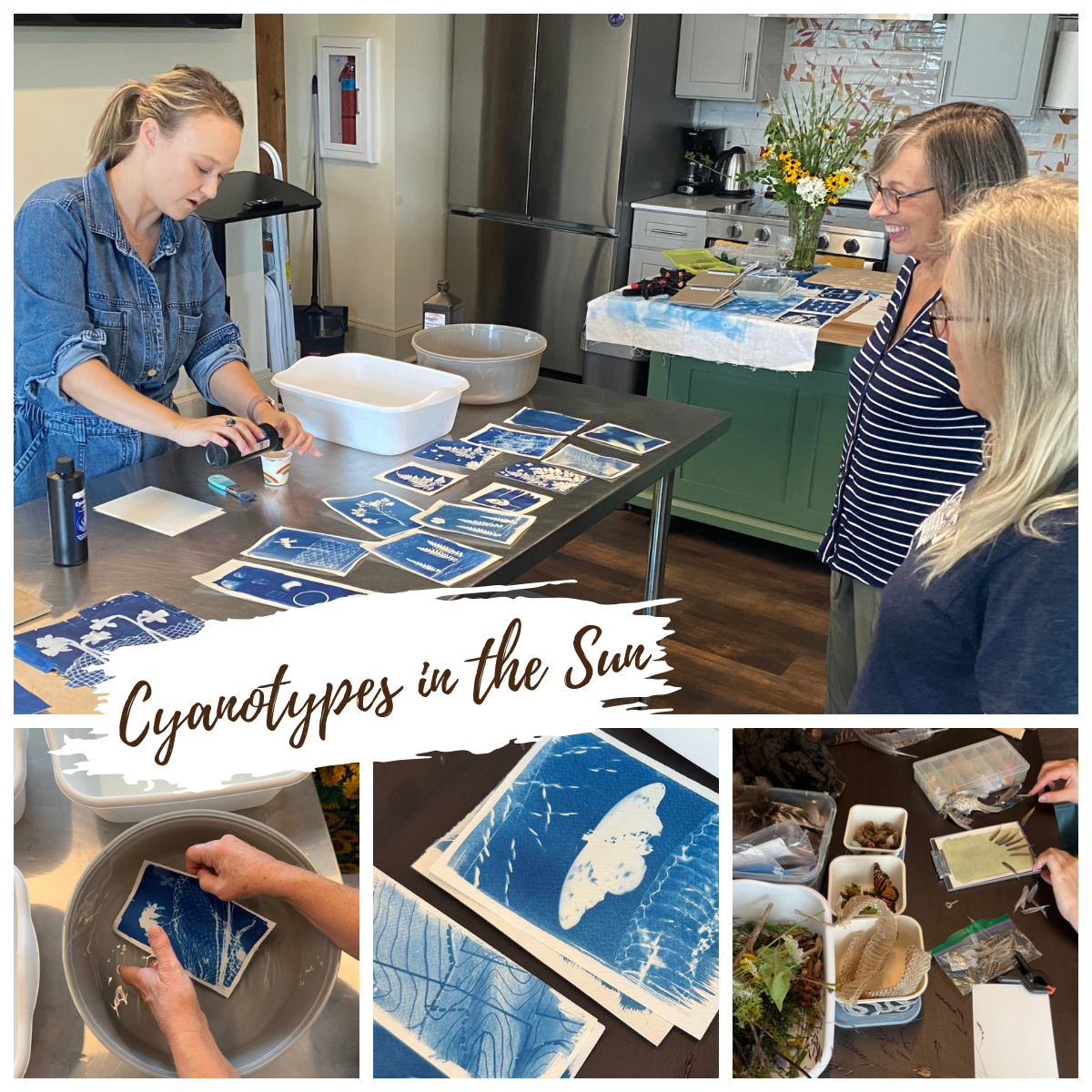
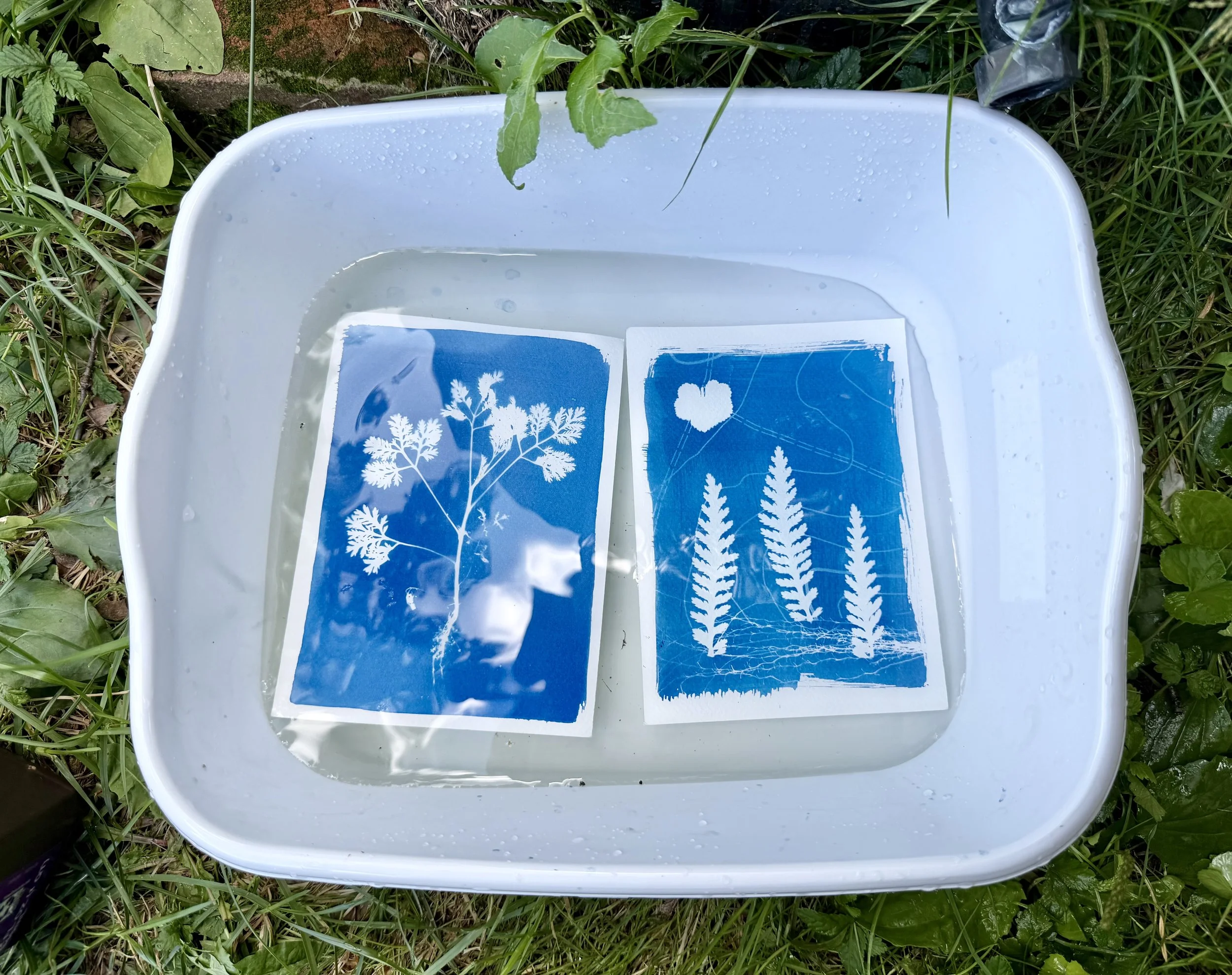
One of the oldest photographic processes to exist, Cyanotype gets its name from the rich color along with the two chemicals combined to create the light sensitive solution: ferric ammonium citrate and potassium ferricyanide. Exposure to UV rays turns the neon green, unexposed chemicals to a dark copper color when fully-exposed. The exposure process is stopped by washing the print in water and allowing to dry, revealing a dark cyan-colored final print. Behind the scenes progress images can be found on the Cyanotypes page.
Linocut Printmaking
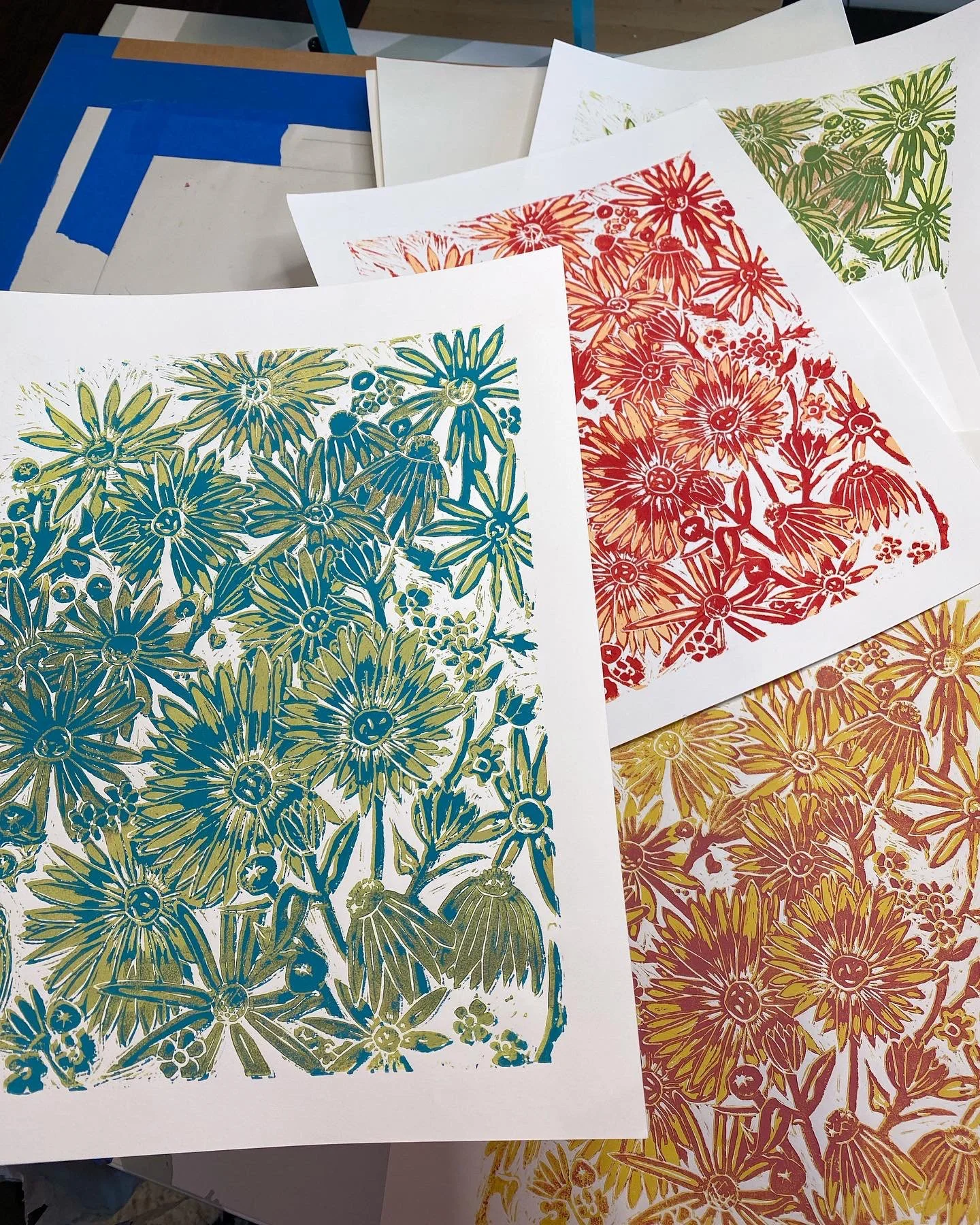
Reduction Technique is a multi-colored, layered print using a single print block. The final print is achieved after printing numerous layers on top of one another, lightest color to darkest. The block itself is made out of easy-cut linoleum, hence the name linocut. Blocks can be made out of other materials including wood and harder plastics.
The floral linocut Golden Calendula, Feverfew & Coneflowers, 2023 is a linocut made using this process. EK is interested in specifically Pennsylvania native plant species. Three separate layers went into this print. This particular print is a monoprint, meaning this is the only print in existence and no print could ever be recreated to complete an edition.